

Photo: Aircrafttag
Two captains, a workshop in Vienna, forty retired airliners.
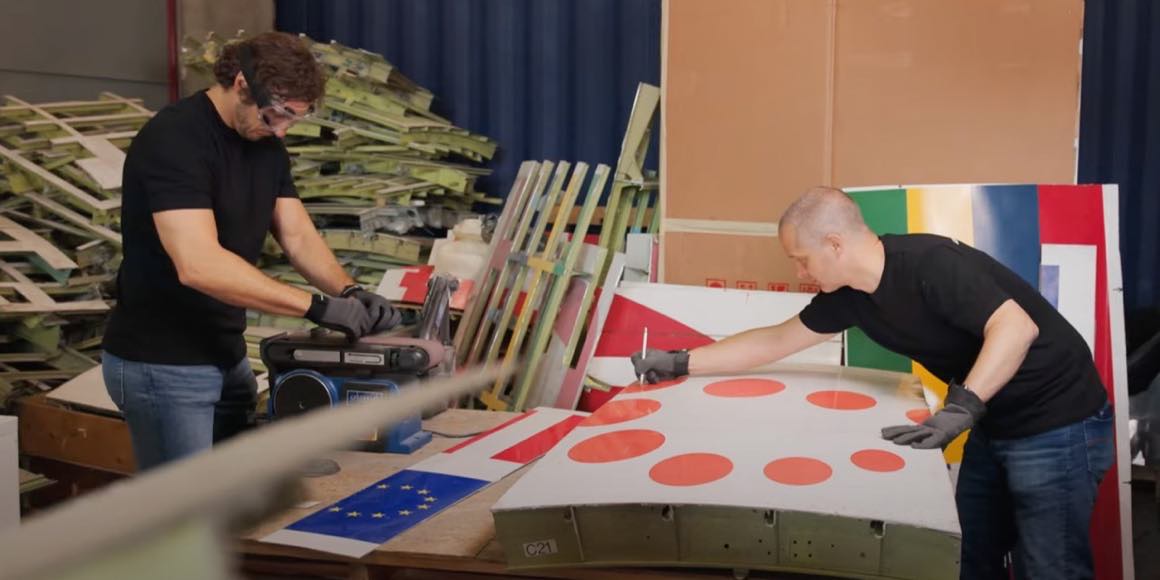
The idea came up on a run together during the pandemic. Today Aircrafttag cuts tags, coasters and magnets from the skin of retired airliners in a workshop in Vienna's 23rd district. Every piece carries the original paint and the registration of the aircraft it came from.
2021
Founded
Two pilots, around 100,000 euros of seed capital
Vienna
Workshop
23rd district, everything made on site
68
Aircraft cut
Each one identified by tail number
56
Airlines represented
From BOAC to ITA Airways
How it started
A Boeing 767 that was going to be scrapped
Ralph Wansch and Patrik Stranz both fly the A320 for Austrian Airlines. During the Covid crisis, on a run together, they got talking about the scrapping of an Austrian Boeing 767 - an aircraft both of them had a particular attachment to. Letting it go that way was not an option, and the idea was born.
Around 100,000 euros of seed capital went into the company, the biggest item a laser machine for the aluminium panels. The first test material turned up in Spain: the recycler Servitec had just dismantled an A330, a former Austrian Airlines aircraft that last flew for TAP Air Portugal. The first square metres of skin from a Boeing 747 of Spain's Wamos Air followed.
See the aircraft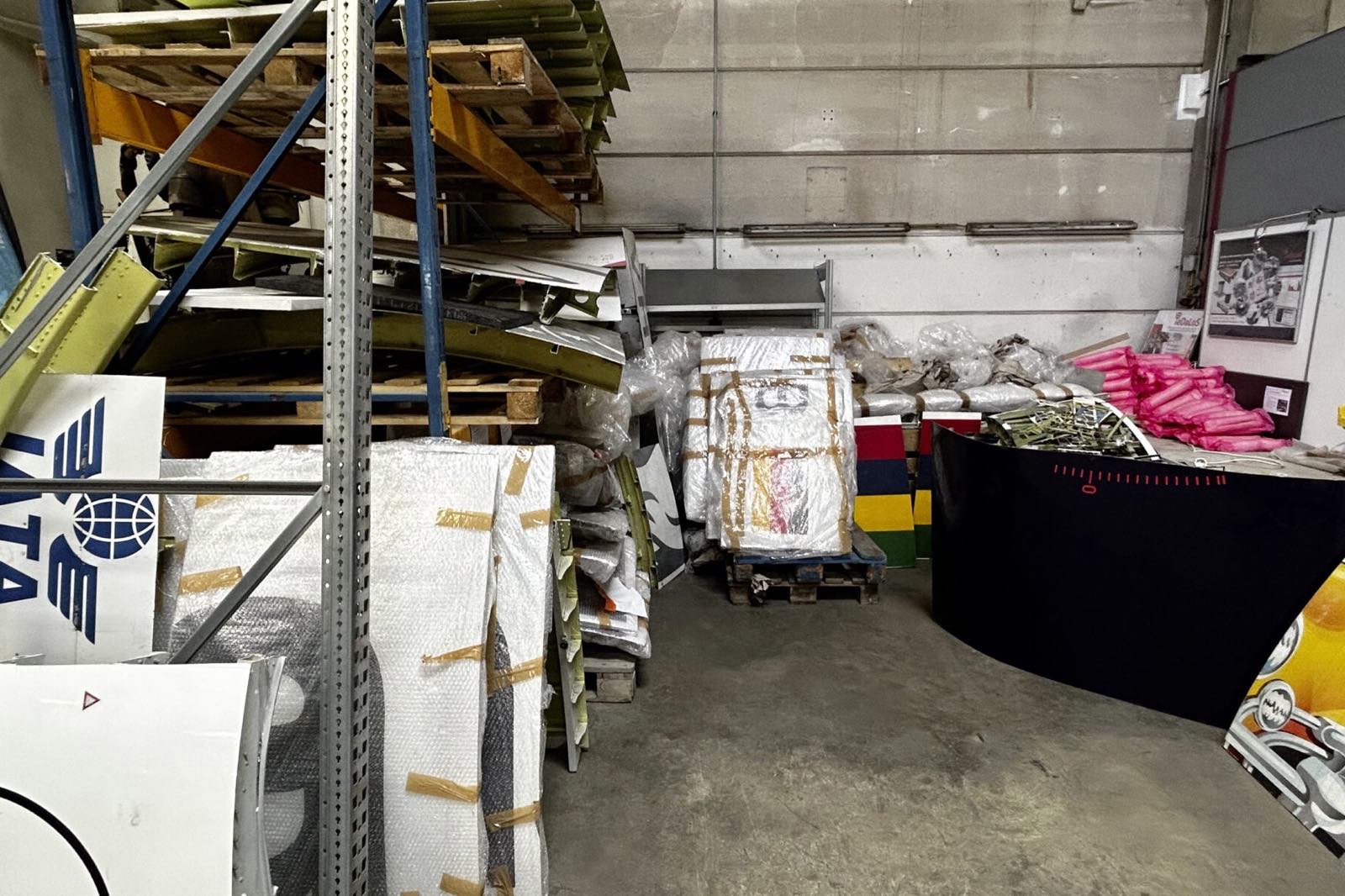
The crew
There is no marketing department here
The four people who source the material, argue about the cut and pack your order fly or work the cabin for a living. That is why the data on a tag is right, and why this shop talks about aircraft the way crews actually talk about them.
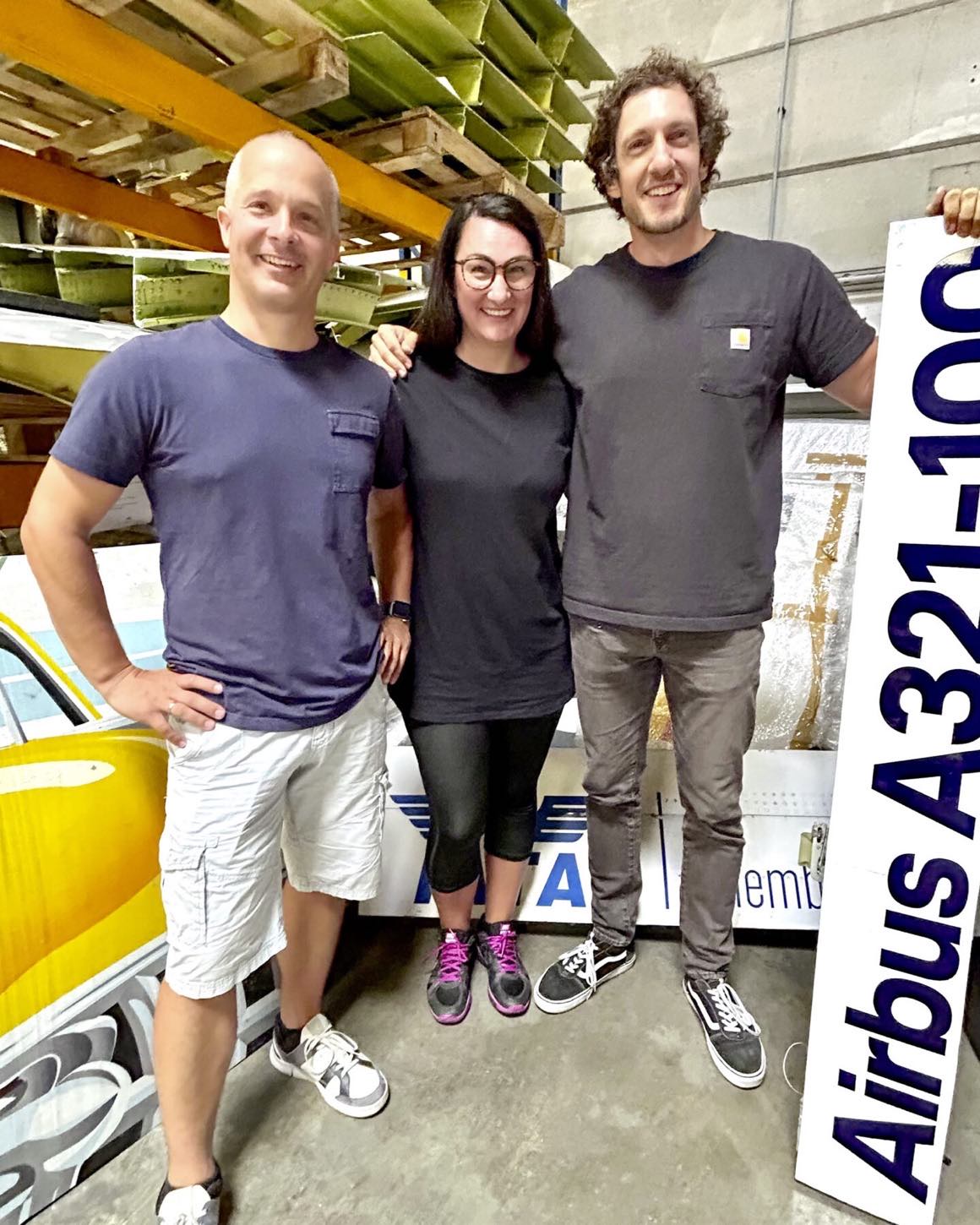
Ralph Wansch
Founder · A320 captain
Finds the material, negotiates with the recyclers and looks after the website and online sales.
Patrik Stranz
Founder · A320 captain
Handles the conversations with airlines about using their logos. Some decisions take six months.
Denise Bohrmann
Cabin crew · Laser
Was a teacher, moved to the cabin in 2017, and now engraves every piece on the laser.
Gerhard Valli
Former pilot · Shipping
Runs the shipping logistics, from Vienna out to the resellers in Hong Kong, Osaka, Tokyo and Zurich.
In the workshop
From fuselage panel to key ring
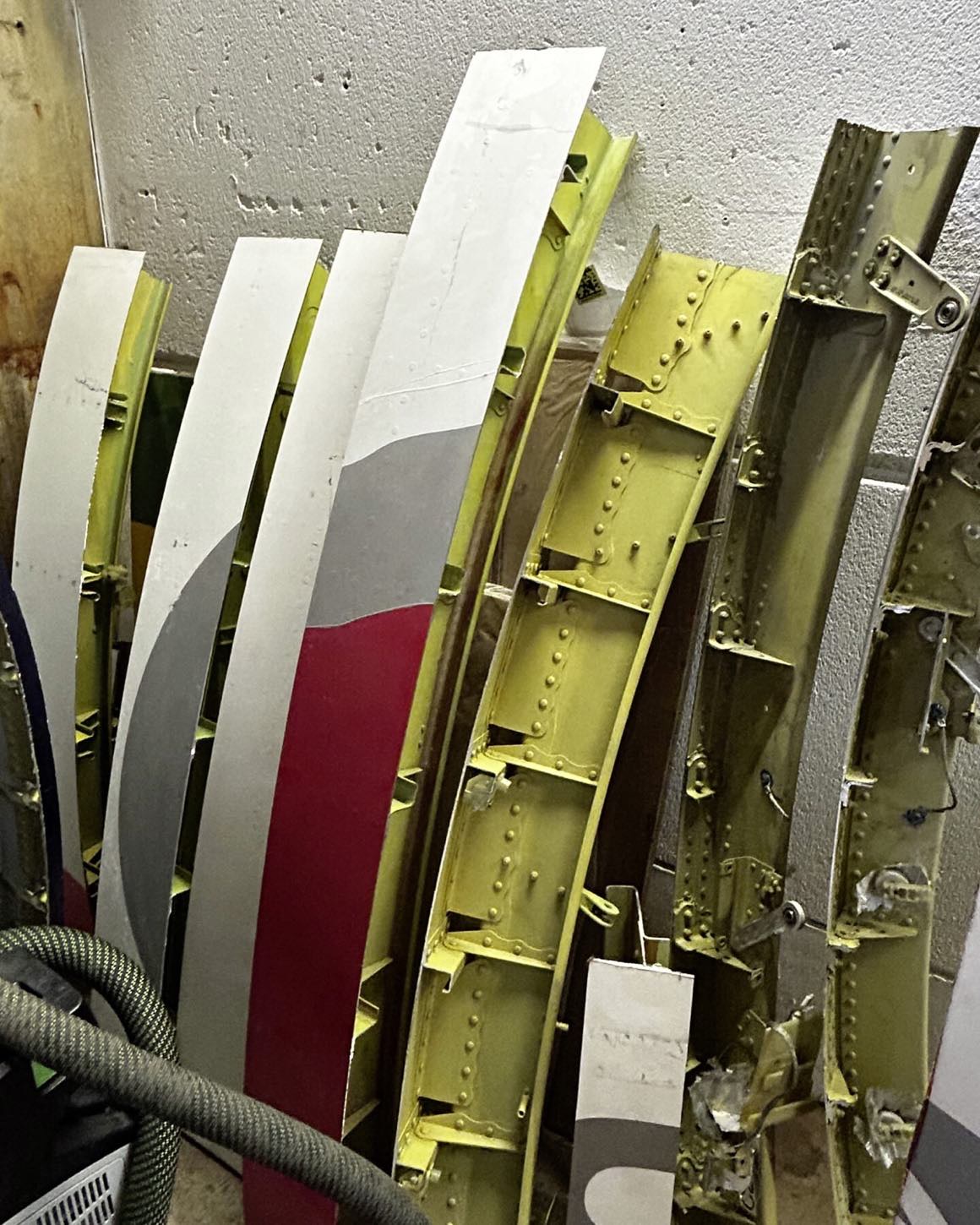
Everything is made on site in Vienna. Only skin from the fuselage is used: the tail of an airliner is usually not metal but composite.
How it's made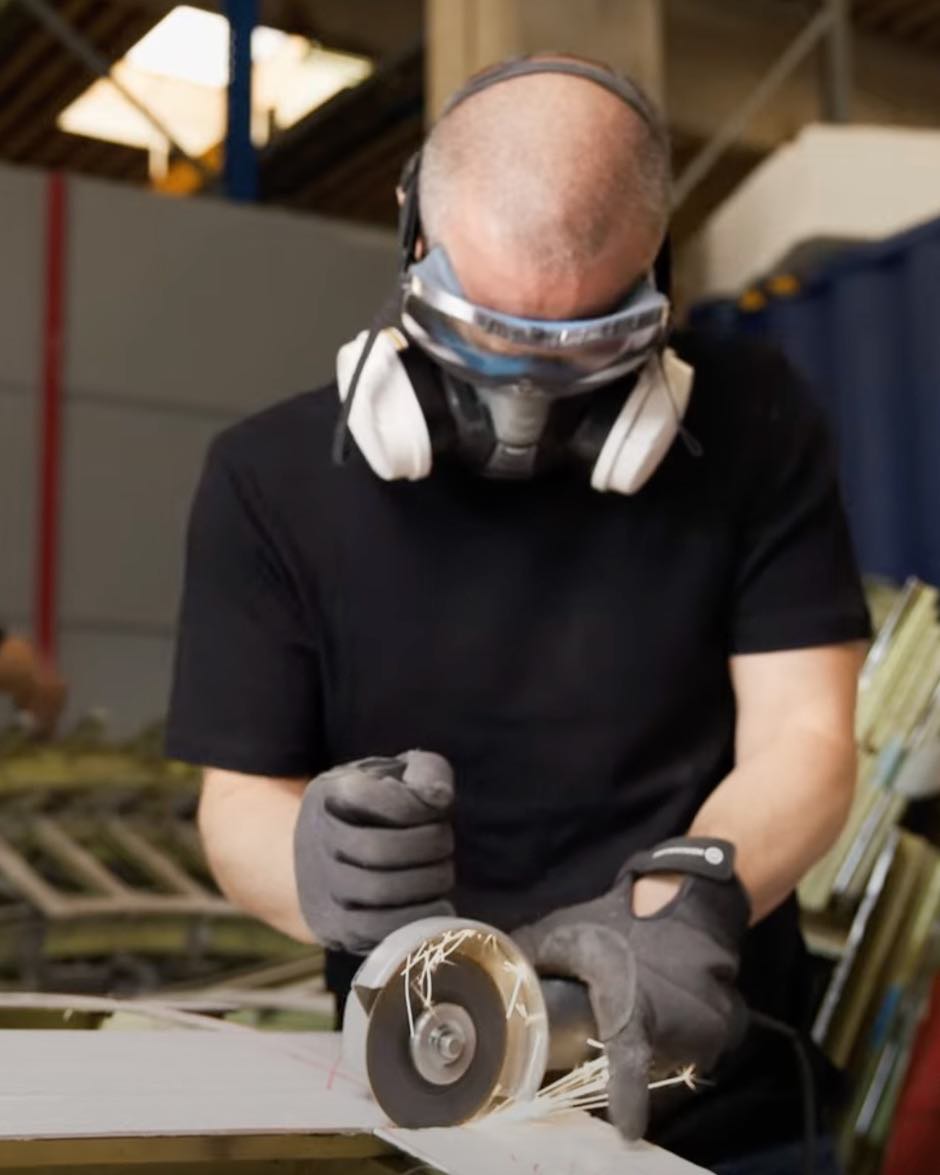
01
Dry ice
Every product starts with cleaning the aircraft skin. That is done with dry ice.
02
Separating
An angle grinder separates the skin from the stringers, then the cutting lines are drawn on.
03
Press and water jet
The heart of the company is a punch press. A water jet cutter brings each piece precisely to shape.
04
Sand, laser, clean
Sanded, cleaned, engraved on the laser and cleaned once more.
The material
Getting hold of the scrap was the real work
The aircraft recyclers were puzzled at first that anyone wanted their waste. Now it runs the other way: they call us when a fuselage carries something special. Large white areas are of little interest; what matters is liveries, logos and registrations - and increasingly the search extends to business aviation.
35-40
Airframes processed, from the ATR 72 and the 737 to a Super Guppy
70-130
Tags come out of one square metre of skin
100 %
Made in Vienna, from the first clean to the packed box
40 m²
Largest single haul: Virgin Australia's Boeing 777-300ER VH-VBD
It was a real risk during the pandemic. Nobody knew where the aviation industry was going.
The airlines
Every logo on a tag is cleared first
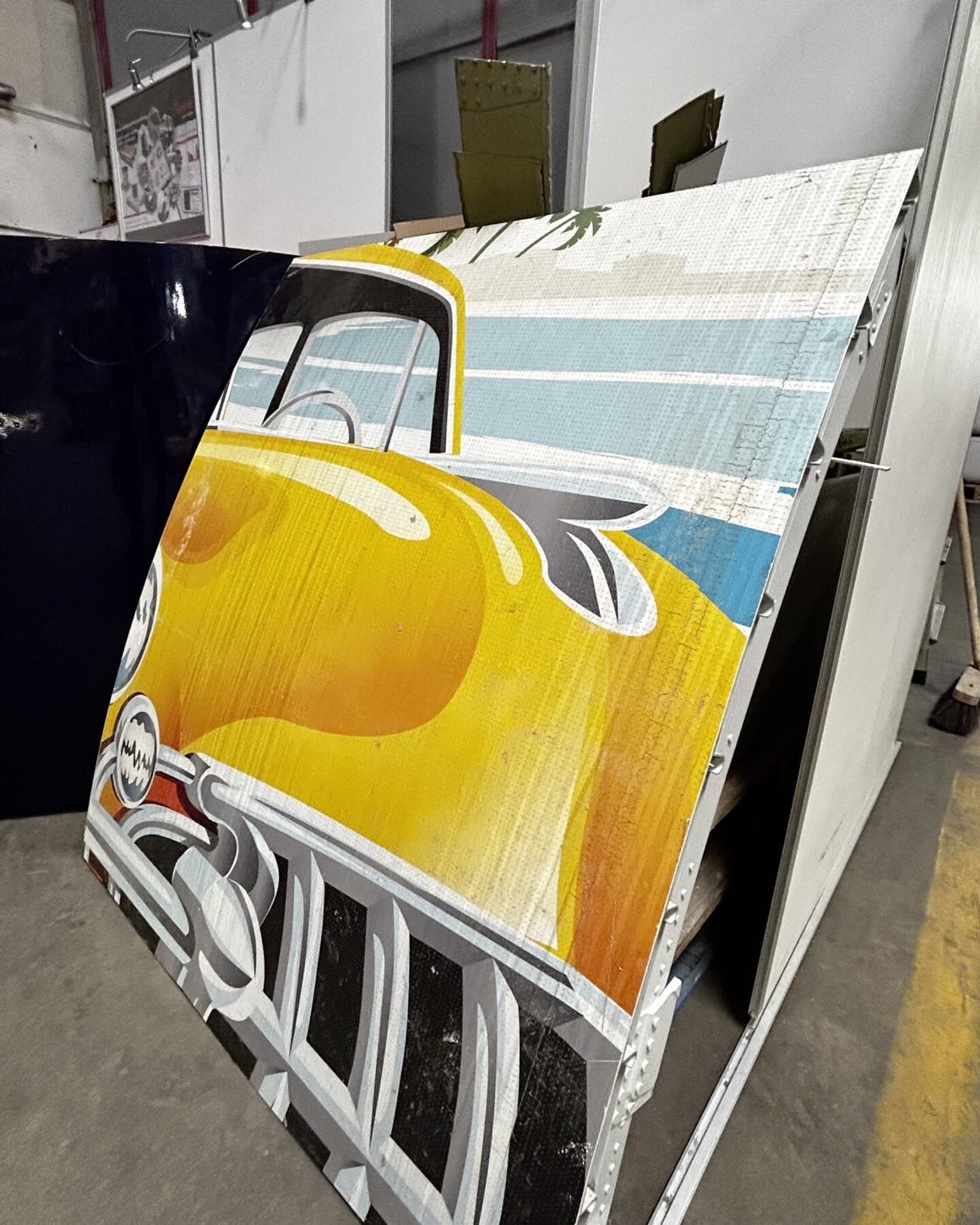
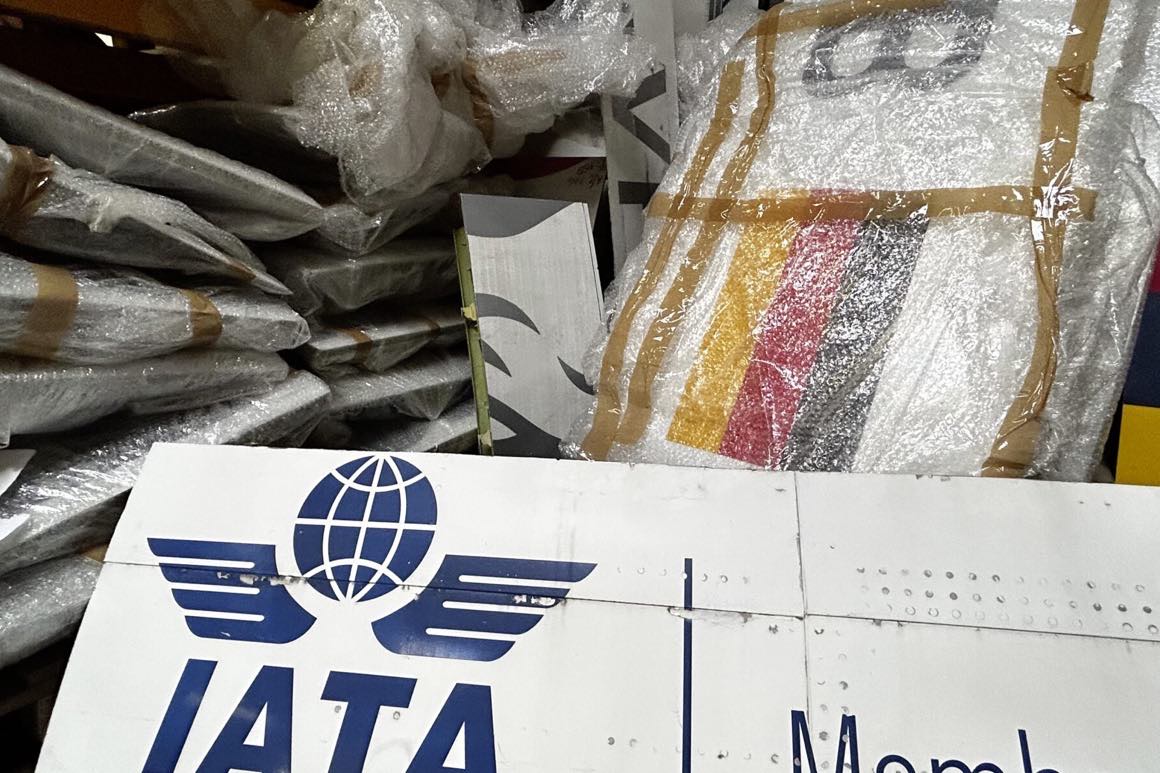
Before a single cut there is a phone call to the airline. If they agree, the tag carries their logo; if they never answer, it carries the registration alone, as with the Boeing 757 of Cabo Verde's TACV. Miles & More uses aircrafttags to honour the best customers of the Lufthansa Group airlines, IATA hands out tags with a QR code on the back at trade fairs, and the Lufthansa WorldShop carries a special edition cut from the Cuba livery of a Eurowings A330, bought at auction together with the charity Help Alliance.
Browse by airlineD-AIPL
Airbus A320, Lufthansa. The tags for Miles & More
OE-LAW
Boeing 767, Austrian Airlines
OO-SFZ
Airbus A330, Brussels Airlines
VH-VBD
Boeing 777-300ER, Virgin Australia. 2,000 tags, with your name on request

The product
Data on the front, original paint on the back
The face carries the data of the machine the piece came from: registration, type, build year, last flight and the number within the limited run. The back is raw skin, in the paint it wore in service. Your own name goes on it on request.
Shop aircrafttagsWhat is on our own key rings
Pieces from the airframes currently on the bench.


What comes off one aircraft
One airframe yields a limited run, and never the same run twice. Tags, coasters, magnets and displays, all from the same skin.


Upcycling here is the workflow, not a label
One square metre of skin yields 70 to 130 tags. What is left over is used too: stringers become display stands for the tags, smaller offcuts become magnets. The packaging cartons come from a printer nearby, offset to carbon neutral with certificates. The material was mined long ago, made long ago and written off long ago - cutting it into something a person keeps for twenty years is the longest life we can give it.
How it's made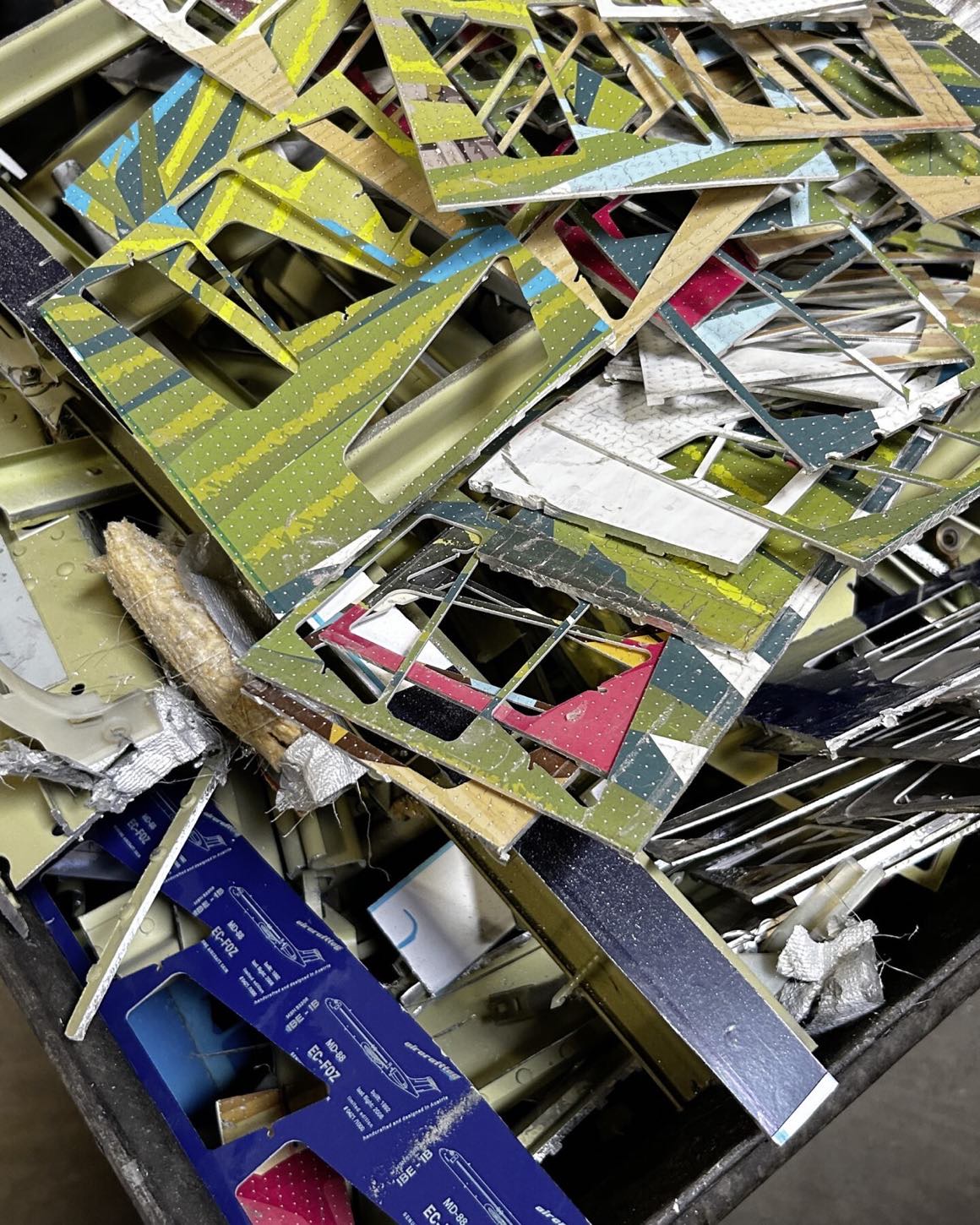
Ordering for a crew, a base or a whole fleet
We cut bulk orders from a single airframe, so an entire team ends up with pieces of the same aircraft. Engraving and bespoke packaging are possible, and so is a specific registration if we can still get to it. IATA is among our business customers.
Business and bulk ordersTalk to the crew
Questions about an airframe, a bulk order or a piece you cannot find? Write to us. One of us answers, usually between duties.
office@aircrafttag.comPress
Aero International came to visit
The numbers and quotes on this page come from a feature written in our workshop. So do some of the photographs.
Kurt Hofmann, Aero International, May 2025
Read the featureNew airframes, as they land
We cut a limited number of pieces from each aircraft. Subscribers hear first - which matters, because most airframes sell out.